Introduction
The dissertation stage of the Master’s degree can strike fear into the heart of any postgraduate. The dissertation sounds so…
big. The size of the project alone means that this counts big time towards the final Master’s classification. Big, big, big. But other things loom large too. In most disciplines, students are far more autonomous at the dissertation stage. Often left more or less to it across the summer months, bar a handful of supervisory hours, this is quite a big responsibility. Combined, these factors lead many students to feel a bit overwhelmed, and to worry about failing the ‘big’ dissertation stage.
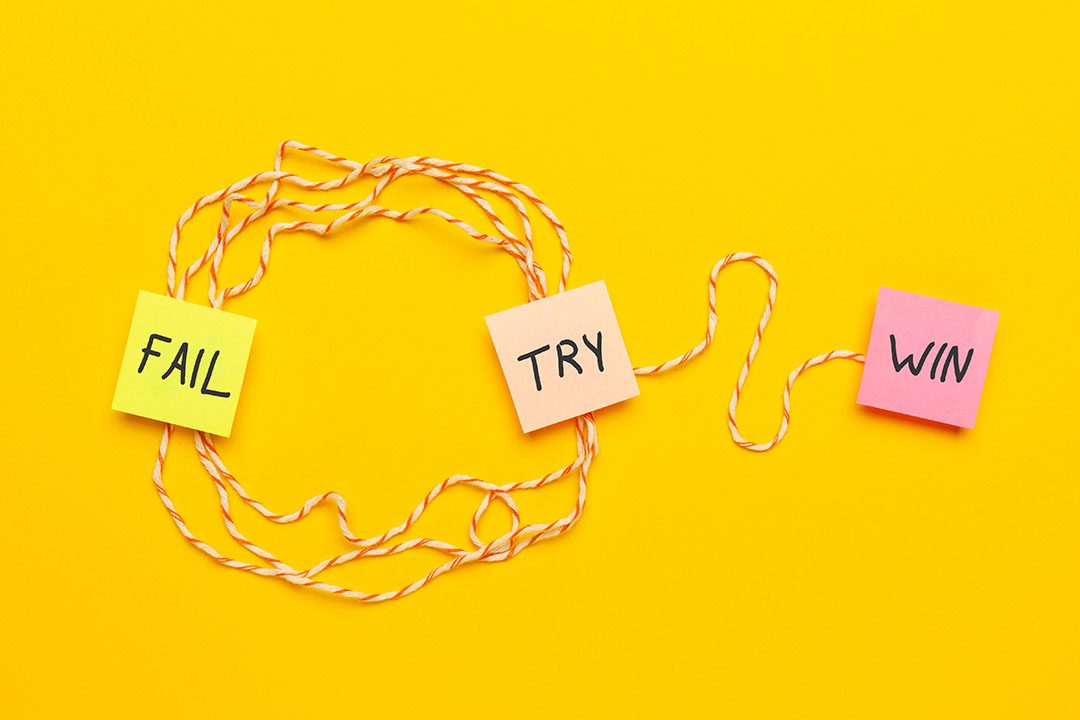
I want to tackle these fears around failure, and the dissertation stage. In a sister post I address the issue of what a fail means at Master’s level and what happens in the event of a fail grade (including on a dissertation project). Here, however, I’m going to speak to the question of how to fail and crucially, how not to fail at the dissertation stage! In my experience as a professor who’s helped many hundreds of Master’s students succeed, it’s hard to fail a dissertation. A fail at the dissertation stage comes down to a Master’s student making one, or more, mistakes – and they are big ones. I present these as a 10-point How to Fail #1-10 list. Now of course I would never recommend trying to fail a dissertation! My aim is to help you see the kinds of behaviours to avoid, and the kinds of behaviours to foster, to enjoy success with your Master’s dissertation. So, let’s go!
10 Top Ways to Fail a Master’s Dissertation
How to Fail #1: Don’t Use Your Supervisor
Welcome to the main reason why any student might fail a Master’s level dissertation. This is a pretty reliable red flag for instances where a student is at risk of failing their dissertation. That’s not to say there won’t be other reasons why that Master’s student hasn’t used their supervisor. There will be. Generally, this failure to connect with the supervisor happens through a series of slips. The student doesn’t feel quite ready to meet up for the initial meeting… then doesn’t make that human face-to-face connection with their supervisor… then doesn’t submit work to them during the summer, etc. These slips can snowball and result in a student
never using their supervisor.
What a missed opportunity (or opportunities)! While you don’t secure a huge amount of time from your supervisor, the time you do get is very valuable. Your supervisor is likely to be a subject area or methods’ expert relating to your project area. Why would you not want their expert input to help you succeed? Your supervisor can also help you get back on track if you get a bit lost in your project. Another great reason to use your supervisor includes:
they are very likely to be part of the assessment team. They might even be one of the markers of your dissertation! So why wouldn’t you want to take up some of their advice before submitting? You’ll be getting their view on what you need to do, to pass and do well! Even if your supervisor isn’t on the marking team, they’ll know the standards and expectations you need to meet. So you’ll get an expert supervising you and helping you to do the best as a Master’s dissertation student.
So top tip #1 if you want to succeed with your dissertation: Use your supervisor. It’s a no-brainer. In my experience, using a supervisor elevates a Master’s student chances of success with their dissertation.
How to Fail #2: Take a very long break before starting work on your dissertation
Some students take a short break at the end of the ‘taught’ part of their Master’s degree before embarking upon the dissertation. No problem. Everyone deserves a holiday free of work. Make sure that you mark out when the start and end points of that holiday/break are, and stick to them. It’s so easy to think that there’s loads of time left to ‘do the dissertation’. And, for some students, this feeling of ‘loads of time!’ can result in a break that spans a month or more, with the result that they embark upon the dissertation far too late.
A university gives you what it considers to be
sufficient time to compete that dissertation. It’s a
big project (albeit, a big project consisting of lots of different little parts). Bar some short ‘holiday’ breaks, all that time is required to finish the dissertation. This becomes clearer once you start mapping out the different things you’ll need to do to get your dissertation underway. So, start your dissertation ASAP, map out a plan, schedule in breaks/holidays, and get stuck in! Set small goals every week to chip away at your dissertation so the work doesn’t pile up.
How to Fail #3: Change Topics part way through the dissertation assessment period
Some students fall out of love with their dissertation topics and research questions. It happens. Is it better to pursue a dissertation that you’re interested and enjoy? Of course. But does that mean that you should change topic if you fall out of love with your dissertation? It depends. If you’re already quite far into the dissertation assessment period, you must talk to your supervisor about this. In my view, changing topics that late is a recipe for disaster. I’ve seen it happen a few times before and I’ve yet to see a case where it pans out well. Jumping ship to a new topic part way through the assessment period means that a student is starting again from scratch but with far less time. You’ll be less prepared, and less able to hit the ground running. And, as your supervisor will have been matched to you on the basis of your original proposal, you might end up with someone ill-suited to your new project.
The likelihood is that your department or programme won’t permit a late change of topic. In most cases, departmental approval is first needed for any Master’s project (e.g. owing to research ethics). But where your school doesn’t keep tabs on this, I’d recommend sticking very close to your approved proposal for more practical reasons. You’ll have a plan to stick to; the right supervisor; a project for which you already have the crucial foundational knowledge. Combined, these factors will maximise your chances of succeeding on your dissertation. But, if you do want to change area, then chat to your supervisor first.
How to Fail #4: Avoid planning and organising your dissertation work
A major reason why a Master’s student might fail a dissertation comes down to the failure to organise themselves. There’s no pluses I can think of for disorganisation. I can almost guarantee that disorganised students will end up working
much longer hours across the project. In turn, the disorganised students are the ones who tend to get overwhelmed and/or feel guilty for much of the dissertation period.
While it’s a big project, the students that manage it fine, keep mentally positive and more or less on track – tend to be much better organised. So be like those organised students! Map out what you need to do from the start. Keep your plan updated with the research steps and milestones you need to achieve. If you have a plan that you update and stick to, you’ll not only become efficient with your time, but odds are, you’ll produce a superior dissertation. Assume that everything you do will take longer than you believe at the planning stage. But above all, if you want to not only pass, but to do well – stay organised, treat your dissertation like a job and show up to work each day. Use an
online platform like Notion to organise yourself and keep all your notes, calendars, drafts and writing outlines together. It helps!
How to Fail #5: Only Write When Inspired
Writing isn’t always easy – and some people get rattled by the blank ‘word document’ page (which I’d recommend avoiding in the first instance). But it is a mistake to
only write when you feel inspired. Inspiration is fickle! Instead, it’s discipline and hard work that gets words on the page. Set daily or weekly word count goals and schedule writing time in your diary rather than waiting for motivation. Don’t get too fussy about whether your writing ‘reads well’ – you can revise things later. Focus on getting any words and ideas down. If you’re struggling with writing, then I can recommend learning how to ‘outline’. Check out the outline templates available on
Notion that you can adapt for your own purposes. This can help you develop a well-structured approach to writing and make writing feel far less intimidating.
How to Fail #6: Don’t submit draft written work to your supervisor or submit it late
On most programmes, Master’s students have the opportunity to submit a sample of their written work to their supervisor for review. As per #1 above, you’ll see the reasons why this is an opportunity you should grab with both hands. Your supervisor’s feedback will help you understand what you need to do to meet Master’s level standards and expectations. Their feedback will help you know what you need to do to pass (or secure a far higher mark).
The difficulty is that many Master’s students never come to send their supervisors a sample of their work. At all! Of course, some students might not send work to their supervisors because they haven’t got anything resembling a draft chapter to send. These students are likely to be trying to pull their dissertations together at the very last minute. So other issues, which fall under reasons #4 and #10, are at play and these need addressing.
But there are other reasons students give for not submitting draft work that they already have and
could send to their supervisors. One of the main reasons is: “It’s too draft”. These students do have work, but in a work in progress state. A chapter or document that is replete with typos, missing chunks, missing references and so on. These students have made the mistake of thinking that they should be sending polished copy to their supervisors.
Uh uh. What your supervisor expects is
draft work. Otherwise, why would you be needing to send them any work at all? Be willing to send your supervisor draft work. Try to get the work into a state where there’s something there for your supervisor to comment on that’s useful to you, but don’t fuss about it being perfect.
The other error students make here is sending work to their supervisors far too late in the day. This can be a week or so before the dissertation submission deadline. That’s pointless. You’ll be lucky if your supervisor is able to comment at all within that time frame given the huge stack of other work academics have on. But even if your supervisor is able to push other work to the side to do this at short notice (which you should not expect), you’d have insufficient time to act upon their commentary in any event. The reason you are sending work to your supervisor is for their view of whether there are things you can do to improve the work. So, what’s
also needed here is
time for you to be able to make any suggested improvements before the submission deadline.
I’d recommend sending sample work at the earliest opportunity you can. Chat all this through with your supervisor to gain a good collaborative understanding. This includes what areas of your project you feel you need the most support from your supervisor on.
How to Fail #7: Ignore Official Requirements
Ah, the boring rules and official requirements contained in postgraduate programme handbooks! While they might not make the most thrilling reading, ignore the rules and official requirements at your peril. That stuff is important. Failing to adhere to rules around dissertation format, citation practices etc., can result in a student losing lots of marks. Missing the deadline – even by a whisker – on some Master’s programmes can even result in an automatic fail. So, read the official documentation! Learn what you need to do to submit your dissertation at Master’s level, and attend any workshops so that you know exactly what you need to do. Don’t lose marks over silly things like failing to submit on time, or failing to adhere to the right citation format.
How to Fail #8: Outsource your Master’s dissertation work to artificial intelligence (AI)
Artificial Intelligence has become a game-changer for university students and wider industry. While we’re all working out how to best use large language models (LLMs) like ChatGPT, Claude, etc., it’s clear that there’s great and terrible ways of using them. I work with my Master’s level students to help them learn how to ethically use AI/LLMs to improve their productivity levels. I know that AI is useful for them as Master’s students and I know they’ll need to use these tools effectively in their future careers. So, I show them how. That speaks to the ‘great ways’ of using LLMs, but what about the terrible ways of using LLMs? The most terrible way of all involves outsourcing the work of writing a dissertation, or big chunks of it, to those AI apps. This approach risks, and in some instances can almost guarantee, a fail on the Master’s.
It’s not only that such practices are unethical and very likely plagiarism so that if caught a student could fail. The far higher risk is that such a dissertation would fail simply on quality grounds. That is, just simply for being: a dissertation that is pretty poor. Once you know how these large language models work you will get why outsourcing the work of writing the dissertation on a highly specialist topic is a dreadful idea. You’ll understand why these LLMs ‘hallucinate’ and their broader limitations. It’s not their fault, it’s just how they are! You will realise that these LLMs are not all-knowing, and that to secure good quality outputs you’ll need to put in quite a large amount of work. So the long and short of LLMs is that they’re not going to cut the corners many think they will – even if using these LLMs can be brilliant for creating summaries, generating useful critique and other specific jobs.
In my view, the students that are going to get the most out of AI/LLMs will have put in quite a lot of work into collaborating with a LLM. They’ll use LLMs as a useful virtual assistant but no more than that. In contrast, those using LLMs to avoid doing the dissertation work are likely to get the poorest quality outputs. Ones that will struggle to achieve a bare pass. The positive side of this? No Master’s student can escape the work that a dissertation demands- at least to achieve a pass or more. To pass, that student will need to be in charge of the project and the main author of it (even if one uses LLMs to help stimulate and critique ideas).
How to Fail #9: Pay someone to “Write my dissertation”
This one is a biggie. Avoid writing services and essay /dissertation writing mills. These dodgy concerns have been the subject of UK legislation to outlaw essay and dissertation ‘writing’ mills. But, as with most criminal organisations, they’re very hard to stamp out. You’ll find plenty of concerns still advertising “Best Dissertation Writing Services” or “Write my Dissertation for me UK”.
But there’s one
big reason why you should avoid them: odds are, the dissertation they’ll try to sell you will fail, and you’ll not be able to do anything about it. No disgruntled reviews, no money back, nothing – and these ‘writing services’ know this. Think about it: these firms trade in
cheating. Although they appear to suggest they can help you to pass your dissertation and save you all the work, check out their terms and conditions. There they state that the ‘dissertation’ they deliver to clients are ‘templates’ only. What’s the significance of this? It means that in the event that a ‘dissertation template’ fails, a student has
no comeback. None. These firms know this, which is why they have no real incentive to invest any effort into producing ‘good’ dissertations.
[T]hese firms trade in cheating… in the event that a ‘dissertation template’ fails, a student has no comeback. None. These firms know this, which is why they have no real incentive to invest any effort into producing ‘good’ dissertations.
Any “delighted customer” reviews are very probably fake (think about it, would you really be willing to write a review which effectively tells the world you’ve cheated?). It’s a clever business model (from an evil genius perspective!) but the message here has to be: Hack #9 could be the best way to fail the Master’s dissertation, the Master’s degree as a whole,
and burn money.
How to Fail #10: Leaving too Little Time to Write the Dissertation
Ah those questions on Reddit that say “Can I write a dissertation in 2 weeks?” “Can I write a Master’s dissertation in ten days?” Some Master’s students manage to leave the bulk of the write up for their dissertation until the deadline is on top of them.
Leaving the dissertation so late in the day is risky. It’s a recipe for failure, or underperforming at best. Even if you can produce your dissertation within a short time, it
runs the risk of not being as good as it could have been. Don’t be fooled – when you look at the bits of life that have to be switched off to hyper-focus on the dissertation, the “I wrote my dissertation in 2 weeks”, looks VERY unimpressive. 10 hours per week for 14 weeks on one’s dissertation or 10 hour days for 14 days – that’s the same number of hours. The latter, however, a hyper-intensive regime is brutal – and risky. Few students now can really afford to switch everything else off. But even if you can, remember, this intensive approach sucks as an approach to work, and it sucks for producing a dissertation. So try to change your approach now. Move away from the big ‘word’ document /blank screen, towards a more incremental approach like “outlining”. Using an outlining approach where you make incremental progress (e.g. check out some of the free outlining templates available on
Notion) can help visualise your milestones and trigger your reward system!
Conclusion
What happens, you ask, if a student
does fail? As I note in a
separate post, even if a student does actually fail the dissertation, most programmes provide a resit opportunity. So, failing is not always the big disaster that many assume it is. But, why fail at all? No one should have to fail in my view.
As this post highlights it’s pretty hard to fail a Master’s dissertation! The odds are very much in your favour for passing your Master’s dissertation providing that you put in the work. If you were accepted onto a Master’s programme and have passed the first taught stage, then you CAN pass the dissertation stage too. Students can fail, of course, but as I sought to highlight here, it takes quite a lot of disorganisation to achieve a fail. So if you want to pass, be organised, work with your supervisor and treat the dissertation like a job to maximise your chances of success.
Oh No! I Need Help To Get My Dissertation Back On Track
Should you find yourself in the difficult position that you’ve made many of the mistakes pointed to above, and you think you might need more help at this stage, then
drop me a line so we can informally chat to see what’s possible. I promise that I won’t judge you – the issues highlighted above are mistakes very commonly made (the aim of this article is to help students avoid situations where they need external support). Let’s see how we can work together to help you get your dissertation back on track (and if I can do that within the free 20-minute consultation time, I will).